
PMI insurance is one of those extra costs that quietly adds up every month. Many homeowners don’t realize how much they’re paying over time or how quickly it can be removed with the right steps. Understanding how it works, when it ends, and how to speed up the process can save thousands without changing the loan itself.
This guide breaks everything down in a simple, practical way so the path to removing PMI insurance becomes clear and actionable.
What is PMI and Why It Exists
At its core, what is pmi comes down to lender protection. When a home is purchased with less than 20 percent down, lenders add private mortgage insurance pmi to reduce their risk.
This means:
- The borrower pays monthly insurance
- The lender gets protection if payments stop
- The homeowner builds equity more slowly due to added cost
Typical pmi percentage ranges between 0.5 percent to 2 percent of the loan annually. That can translate into hundreds of dollars every month depending on the loan size.
How Much PMI Actually Costs
Understanding mortgage loan insurance cost helps show why removing it early matters.
Example Breakdown
| Loan Amount | PMI Rate | Monthly Cost | Yearly Cost |
| 200,000 | 1% | 167 | 2,000 |
| 300,000 | 0.8% | 200 | 2,400 |
| 400,000 | 0.7% | 233 | 2,800 |
Even with the cheapest pmi, the numbers stack up quickly over a few years.
When Does PMI Go Away Automatically
A common question is when does pmi go away without taking action.
Under the homeowners protection act, lenders must automatically cancel PMI insurance when:
- The loan reaches 78 percent loan to value ratio
- Payments are current
- No additional liens exist
This rule comes from the pmi cancellation act, which ensures borrower protection and prevents lenders from charging indefinitely.
How to Cancel PMI Early
Waiting for automatic removal is not always the best move. There are faster ways to handle how to cancel pmi and reduce costs sooner.
Key Strategies
- Reach 80 percent loan to value through payments
- Request cancellation directly from the lender
- Maintain a strong payment history
- Avoid late payments or refinancing disruptions
Simple Process
- Check current loan balance
- Estimate home value
- Submit cancellation request
- Schedule appraisal if required
Taking these steps can speed up how to get rid of mortgage insurance by months or even years.
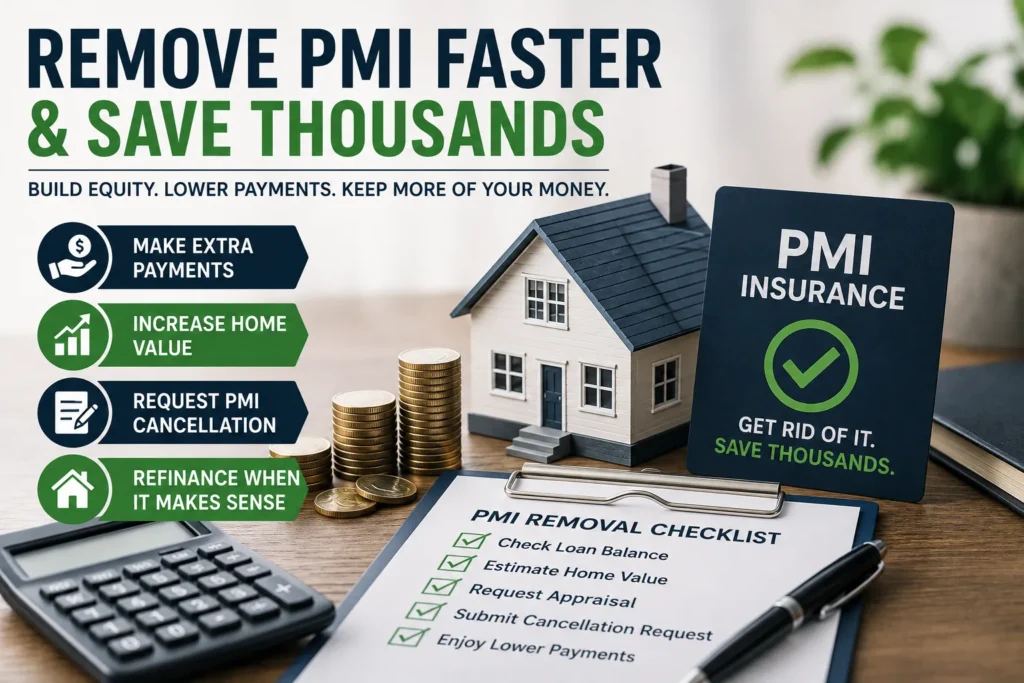
How to Drop PMI Faster with Smart Moves
Looking at how to drop pmi requires a mix of timing and strategy.
Smart Acceleration Methods
- Make extra principal payments
- Increase monthly payment slightly
- Refinance when property value rises
- Renovate to boost home value
Each of these helps reduce loan balance or increase equity, both of which impact PMI insurance removal. A house appraisal may also help establish the property’s current market value when determining whether sufficient equity has been reached.
Refinancing to Remove PMI
Refinancing is one of the fastest ways to eliminate PMI insurance, especially when home value increases.
When It Makes Sense
- Property value has increased significantly
- Interest rates are lower
- Equity has crossed 20 percent
However, refinancing includes fees, so it only works if long term savings outweigh upfront costs.
PMI vs MIP: Know the Difference
Understanding mip vs pmi is important before making decisions.
| Feature | PMI | MIP |
| Loan Type | Conventional | FHA |
| Removal | Possible | Sometimes permanent |
| Cost | Varies | Fixed structure |
PMI insurance can usually be removed, while MIP often stays for the life of the loan unless refinanced.
Can You Avoid PMI Completely
Some borrowers look for a no pmi mortgage option.
Options Include
- 20 percent down payment
- Piggyback loans
- Lender paid PMI
- VA loans
Each option has trade offs. For example, lender paid PMI increases interest rate, which can cost more over time.
Tax Benefits and Deductions
Many ask if is mortgage insurance tax deductible.
The mortgage insurance premium deduction has been available in certain years depending on income limits and tax laws. Checking current eligibility is important since rules change.
Even when deductions apply, the best financial move is still to remove PMI insurance as early as possible.
Quick Checklist to Remove PMI Faster
Action Plan
- Track loan to value ratio regularly
- Make extra payments toward principal
- Monitor property value trends
- Request cancellation at 80 percent threshold
- Consider refinancing strategically
Following this checklist helps reduce reliance on PMI insurance and speeds up financial progress.
Common Mistakes That Delay PMI Removal
Avoid These
- Waiting for automatic cancellation
- Ignoring property value increases
- Missing payments
- Not requesting appraisal when eligible
Small delays can result in paying thousands more in PMI insurance than necessary.
Frequently Asked Questions
What is PMI insurance and why is it required?
PMI insurance is a monthly cost added to loans with less than 20 percent down. It protects lenders, not homeowners, and is required to reduce risk on low equity mortgages, which increases total borrowing cost significantly.
When does PMI go away on its own?
Under the homeowners protection act, PMI automatically ends when the loan reaches 78 percent of the original value, as long as payments are current and no other financial risks exist on the property.
How to cancel PMI early without refinancing?
To handle how to cancel pmi, request removal once equity reaches 20 percent, maintain a strong payment record, and provide proof through an appraisal if needed by the lender.
Is mortgage insurance tax deductible in current year?
The mortgage insurance premium deduction depends on tax laws and income thresholds. It has been available in some years but requires checking updated IRS guidelines before claiming benefits.
What is the difference between PMI and MIP?
The difference in mip vs pmi lies in loan type. PMI applies to conventional loans and can be removed, while MIP applies to FHA loans and may remain for the full loan term.
Can PMI be removed before reaching 80 percent equity?
Yes, in some cases lenders allow early removal if property value increases significantly, but this usually requires a formal appraisal and strong payment history.
What is the average PMI percentage?
The typical pmi percentage ranges from 0.5 percent to 2 percent annually based on credit score, loan size, and down payment, directly affecting monthly housing costs.
Are no PMI mortgage options worth it?
A no pmi mortgage can avoid monthly insurance costs, but may include higher interest rates or complex loan structures, making long term cost comparison essential before choosing.
How much does PMI add to monthly payments?
The mortgage loan insurance cost can add hundreds monthly depending on loan size and rate, making early removal of PMI insurance one of the most effective ways to save money over time.