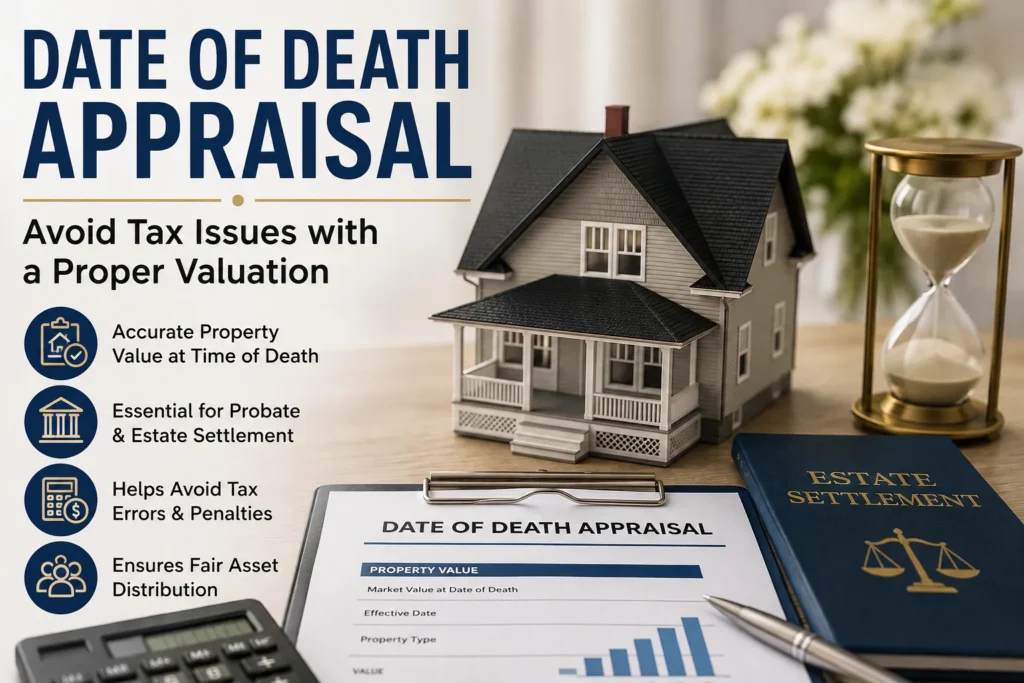
A date of death appraisal becomes the first real step when settling an estate because it locks in the property value at the exact moment someone passes away. This is not about today’s market, it is about that specific date, which is why a date of death appraisal is used in probate and legal tax filings.
What does a Date of Death Appraisal Really Mean?
A date of death appraisal is basically a snapshot of property value frozen in time. It shows what a house or land was worth on the day the owner passed away, not before and not after.
This is important because property prices move constantly, and only a date of death appraisal ensures legal accuracy during estate settlement.
What it includes
- Market value at time of passing
- Property condition at that exact date
- Local real estate trends at that time
- Comparable property sales from the same period
This is where property value assessment and appraised property value come into play, helping support a solid valuation report.
Why a Date of Death Appraisal is so Important in Probate
A date of death appraisal plays a major role in probate because courts rely on it to decide how assets are distributed and whether taxes apply.
Without a proper date of death appraisal, estate settlement can turn messy very quickly.
Key Reasons It Matters
- Prevents incorrect tax calculations
- Supports fair asset distribution
- Reduces legal disputes among heirs
- Ensures compliance with estate laws
It also helps answer common concerns like is inheritance taxable, since accurate valuation is the base of that calculation.
How property value is determined at the time of death
To establish a date of death appraisal, professionals study market conditions that existed on the exact date of passing.
This process includes:
Valuation steps
- Reviewing similar property sales from that time
- Checking property condition and maintenance level
- Studying neighborhood demand during that period
- Applying standard real estate tax valuation methods
This is how experts determine how to determine date of death value of property in a legally acceptable way.
A date of death appraisal ensures nothing is estimated based on guesswork or current prices.
Alternate valuation date rules and when it applies
Sometimes estates use an alternate valuation date instead of a date of death appraisal, which allows assets to be valued six months later.
This option is only used if it reduces estate taxes or benefits the overall estate.
When it is used
- Property value drops after death
- Market conditions change significantly
- Tax savings become possible
Even then, a date of death appraisal is still usually required as the primary reference point.
Types of Appraisers Involved in Estate Valuation
Different professionals handle different parts of estate valuation depending on property type and complexity.
Residential appraiser
- Handles homes and residential estates
- Common in probate cases involving family property
Building appraisal
- Used for commercial or mixed-use buildings
- Includes structural and income analysis
Land appraisal services
- Focus on raw land and development potential
- Used in rural or agricultural estates
Appraisal companies
- Provide full legal valuation reports
- Handle complex estate portfolios
Each of these supports a strong and accurate date of death appraisal when required.
Assessed Value vs Market Value Confusion
Many estates get confused between assessed value and market value during probate.
| Type | Meaning |
| Assessed value | Government tax value |
| Market value | Real selling price |
| Date of death valuation | Historical probate value |
A date of death appraisal is closer to market value at a specific past moment, not tax-assessed numbers.
This difference is critical when handling property tax assessment or tax assessed value vs market value comparisons.
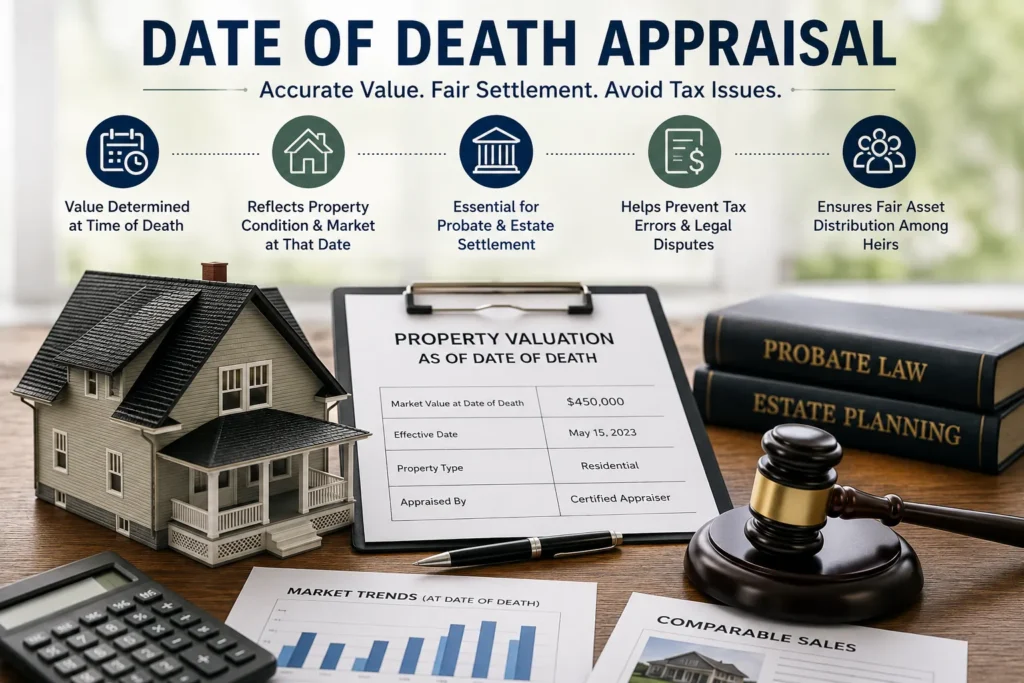
Cost of a Date of Death Appraisal and What Affects It
The date of death appraisal cost depends on how complex the property and estate are.
Factors Affecting Cost
- Property size and condition
- Location and market activity
- Type of property involved
- Level of documentation required
A simple residential date of death appraisal is usually more affordable than commercial estate valuation.
Common Mistakes During Estate Valuation
Mistakes in valuation can cause legal and financial issues later.
Avoid these errors
- Using current market value instead of historical value
- Skipping professional appraisal services
- Ignoring property condition at time of death
- Overlooking probate requirements
A properly done date of death appraisal avoids these problems completely.
Why Professional Valuation Makes Everything Easier
A proper date of death appraisal removes uncertainty from estate settlement.
Professionals use:
- Historical market data
- Legal probate rules
- Physical property inspection
- Comparable sales analysis
This ensures the estate process stays smooth and legally correct from start to finish.
Quick overview table
| Concept | Purpose |
| Date of death appraisal | Legal estate valuation |
| Alternate valuation date | Optional tax adjustment |
| Residential appraiser | Home valuation expert |
| Property tax search | Tax record verification |
| Appraised property value | Market-based valuation |
Conclusion
A properly handled date of death appraisal is the foundation of accurate estate planning, fair inheritance distribution, and correct tax reporting. Without it, estates risk disputes, delays, and unnecessary tax issues.
Frequently Asked Questions
What is a date of death appraisal and why is it required in estate settlement and probate valuation processes for property ownership transfer?
A date of death appraisal is a legal valuation that determines property worth at the exact time of death. It is required for probate so assets are divided fairly, taxes are calculated correctly, and legal ownership transfer is properly documented.
Who performs a date of death appraisal and what qualifications are required for residential and commercial estate valuation experts?
Certified residential appraisers or licensed valuation professionals perform these reports. They must understand probate law, real estate trends, and historical market analysis to produce legally accepted documentation.
Is inheritance taxable and how does a date of death appraisal affect estate tax calculation and legal compliance requirements?
Inheritance tax depends on jurisdiction, but a date of death appraisal determines estate value, which directly impacts whether taxes apply and how much is owed during probate settlement.
What is an alternate valuation date and when can it be used instead of a date of death appraisal in estate tax planning strategies?
An alternate valuation date allows assets to be valued six months after death. It is used only if it reduces estate taxes and is legally approved, but original valuation remains the primary reference.
How is property value determined using a date of death appraisal in house valuation for probate purposes and legal documentation?
It is determined by reviewing past market conditions, comparable sales, and property condition at the time of death. This ensures accurate historical value for probate court acceptance.
What factors influence date of death appraisal cost in residential and commercial property valuation services for estate planning?
Cost depends on property size, complexity, location, documentation needs, and whether the property is residential or commercial. More complex estates require more detailed valuation work.
Do estates require official house valuation for probate and how do appraisal companies support legal estate settlement processes?
Yes, most estates require official valuation. Appraisal companies provide certified reports that courts accept for probate, ensuring accurate asset distribution and legal compliance.
What is the difference between assessed value vs market value in property tax assessment and real estate valuation processes?
Assessed value is used for taxation by authorities, while market value reflects actual selling price. Neither replaces a date of death appraisal, which is based on historical value.
What happens if a date of death appraisal is incorrect in probate proceedings and estate valuation of personal property distribution?
Incorrect valuation can lead to tax penalties, legal disputes, delayed probate, and unfair inheritance distribution, making accurate appraisal essential for smooth estate settlement.