
Commercial real estate appraisal is basically that moment where everything becomes clear in real estate. Before any big decision is made, before money changes hands, before a property gets listed or bought, this is the step that quietly decides what the property is actually worth in the real world.
Not what someone hopes it is worth. Not what an owner feels it should be. But what the market is ready to pay for right now.
That is what commercial real estate appraisers do. It pulls everything back to reality.
And in commercial property, that reality matters a lot more because the numbers are bigger, the risks are higher, and the mistakes are far more expensive.
What is Really Happening in Commercial Real Estate Appraisal
When people hear commercial real estate appraisal, it can sound technical, but in simple terms it is just a structured way of answering one question:
“What is this commercial property truly worth today?”
Commercial appraisal looks at income, location, condition, demand, and market trends. It studies how much money the property can generate and how strong the demand is in that area.
So instead of guessing, everything is broken down into real signals from the market.
For example, a shop in a busy commercial street will not be valued the same as a warehouse in a low-demand area. Even if both are the same size, the value changes because the earning potential is different.
That is the heart of commercial real estate appraisal.
Why this Step Matters so Much Before Any Deal
In real estate, most problems start when pricing is wrong.
Commercial appraisal prevents that.
Before selling or buying, this process gives a clear direction so no one is operating in confusion. Sellers avoid pricing too high and sitting on the market for months. Buyers avoid paying more than what the property can actually deliver in returns.
Even in situations like selling my house or selling home assets that include commercial units, this becomes even more important because one wrong number can affect the entire financial outcome.
And when someone is thinking about selling my home, especially if part of it has commercial use or rental space, knowing the true value becomes the difference between a smart deal and a stressful one.
Commercial real estate appraisal keeps everything balanced.
How is the Valuation Actually Understood?
It follows a clear flow that almost feels like building a full story of the property.
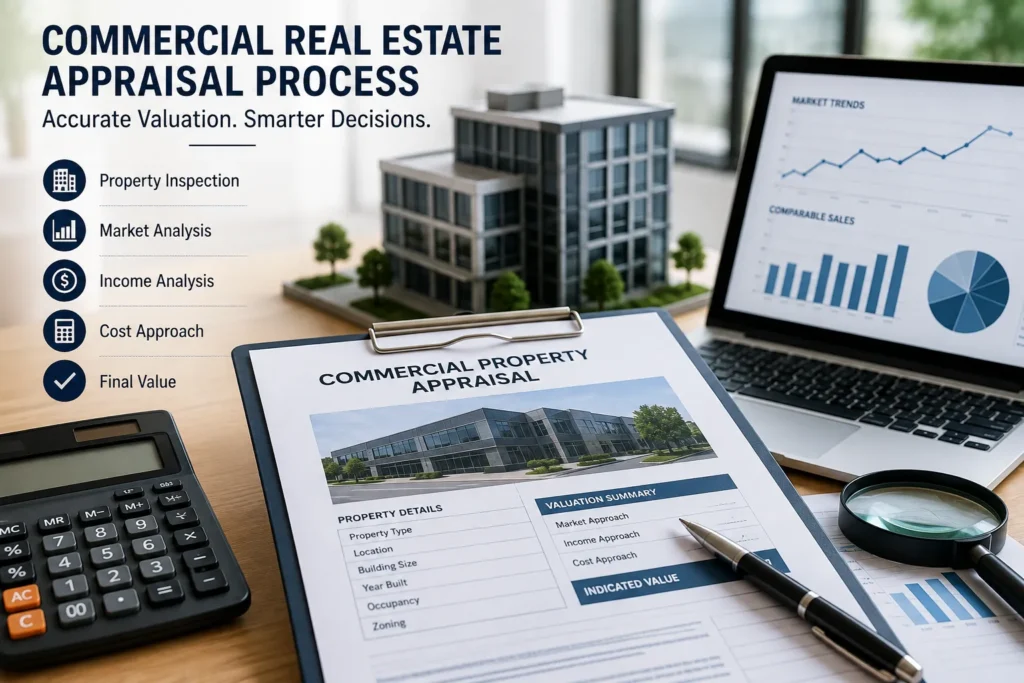
It usually starts with inspection. The building is checked properly, inside and out. Then comes the market study, where similar properties are compared. After that, income is analyzed, especially if rent is involved.
Then comes cost thinking, like how much it would take to rebuild the property today. Finally, all of this is combined into one final value.
So instead of one opinion, there are multiple layers of reality coming together.
That is why real estate appraisal is trusted by banks, investors, and serious buyers.
What Actually Affects Property Value in The Real World
There are always a few things that can push value up or pull it down. And in commercial real estate appraisal, these are always checked carefully.
- Location and how active the area is
- Type of tenants and rental consistency
- Condition of the building and maintenance level
- Market demand in that region
- Future development plans nearby
Each of these things quietly changes how buyers think and how investors calculate returns.
For example, a clean building in a growing commercial zone can gain value even if it is not fully rented yet. On the other hand, an older building in a slow market may lose value even if it is fully occupied.
That is how sensitive real estate appraisal really is.
Why skipping valuation causes problems
A lot of people skip proper valuation and go straight into pricing. That usually leads to issues.
Sometimes a property stays listed for too long because the price is too high. Other times, it sells quickly but the owner realizes later that it was undervalued.
Both situations come from missing proper commercial real estate appraisal. Accurate valuation is also important when property owners need a Tax Appeal Appraisal to challenge an assessment that may not reflect current market value.
Common mistakes include:
- Setting price based on emotion instead of data
- Ignoring repair or upgrade costs
- Assuming rent will always stay the same
- Using outdated comparisons from the market
- Not consulting a professional real estate appraiser
These mistakes look small at first but create big financial gaps later.
The Role of Professionals in the Process
Commercial appraisal becomes far more accurate when handled by trained experts.
A real estate appraiser is not just looking at the building. They are reading the market, studying trends, comparing similar properties, and calculating risk.
Professional real estate appraisers follow structured methods so the valuation can stand in front of banks, investors, and legal processes without issues. The same valuation expertise is also used in specialized situations such as a Date of Death Appraisal, where an accurate historical property value is required for legal or estate purposes.
There are also real estate appraiser requirements they must meet, which include training, licensing, and understanding local market laws.
This is why their reports carry weight in financial decisions.
How this Helps Both Buyers and Sellers
Commercial real estate appraisal is not just useful for one side. It helps both.
For sellers, it sets a realistic price so the property attracts serious buyers instead of sitting idle. For buyers, it gives confidence that the property is not overpriced.
It also helps investors decide whether the property is worth holding long-term or should be sold.
In simple terms, it answers questions like:
- Is this a fair deal
- Is the income strong enough
- Is the price justified
- What is the future potential
That is why appraisal in real estate is seen as a decision-making tool, not just a report.
Comparing properties to understand value better
One of the most practical parts of commercial appraisal is comparison.
Properties are studied side by side to understand what the market is doing.
| Property Type | Income Strength | Market Condition | Value Trend |
| Office Space | Strong | Stable | Steady rise |
| Retail Unit | Medium | Active | Moderate |
| Warehouse | High | Growing | Strong rise |
This kind of comparison makes pricing easier to understand and more transparent.
Commercial property valuation follows the same idea, especially when investors are looking at multiple options before making a decision.
Why Timing Changes Everything
One thing that is often ignored is timing.
Commercial real estate appraisal is not fixed forever. Markets change. Interest rates shift. Demand rises or falls.
A property valued today might not hold the same number six months later.
That is why investors and serious buyers always look for updated valuation before making decisions.
Even small market changes can affect real estate appraisal results.
Emotional Thinking vs Real Market Thinking
Real estate often becomes emotional. Owners attach memories, effort, and expectations to a property.
But the market does not work on emotion.
Commercial real estate appraisal removes that emotional layer and focuses only on facts. Income, demand, condition, and future growth decide the value.
That is what keeps pricing fair across the industry.
Without this step, decisions become personal instead of financial.
Long-Term Thinking and Investment Growth
It is not only about buying and selling. It is also about long-term planning.
Investors use it to understand which properties are growing in value and which are slowing down.
It helps in deciding:
- When to sell
- When to renovate
- When to hold
- When to reinvest
This is where real wealth planning starts in real estate.
Simple Truth Behind Valuation
At the end of the day, real estate appraisal is about clarity.
It answers the question every buyer and seller actually cares about: what is this property really worth in today’s market.
Not last year. Not in the future. Right now.
That clarity is what makes deals smoother, faster, and safer.
Conclusion:
It is the foundation of smart property decisions and helps sellers avoid underpricing. It helps buyers avoid overpaying and helps investors stay confident in their choices.
Without it, the market becomes guesswork. With it, decisions become structured and clear.
That is why commercial real estate appraisal stays at the center of every serious commercial property transaction.
Frequently Asked Questions
What does commercial real estate appraisal?
It tells the real market value of a commercial property based on income, condition, demand, and location instead of assumptions or emotional pricing.
Why do buyers rely on commercial appraisal before purchasing?
Because it helps confirm if the asking price is fair and whether the property can actually generate enough return in the current market conditions.
Who usually performs real estate appraisal?
A trained and certified real estate appraiser who studies market data, inspects the property, and compares similar buildings to determine fair value.
Can real estate appraisal change over time?
Yes, it can change based on market trends, interest rates, local development, and demand shifts in the surrounding area.
Why is location so important in commercial real estate appraisal?
Because location directly affects customer traffic, rental income potential, and long-term demand, which all influence property value.
Is real estate appraisal needed for loans?
Yes, banks require it to make sure the property value supports the loan amount and reduces financial risk for lending institutions.
How does rental income affect property value?
Higher and stable rental income usually increases property value because it shows strong earning potential for investors.
What happens if appraisal value is lower than expected?
The seller may need to adjust price, improve the property, or renegotiate, while buyers may use it to secure better terms.
How often should a property be appraised?
It is usually done every few years or whenever major financial decisions, refinancing, or market changes occur.
What is the biggest benefit of commercial real estate appraisal?
The biggest benefit is clarity, it removes guesswork and helps every decision be based on real market data instead of assumptions.